
The Timing-Based Swing
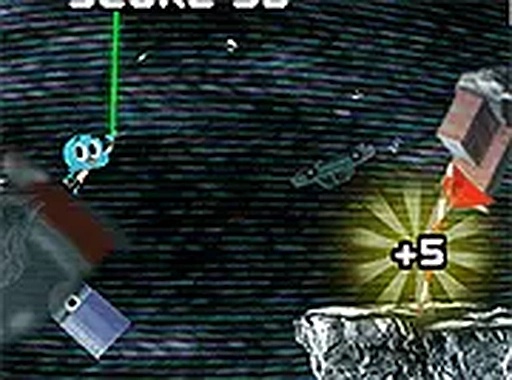
Swing Platform Arcade builds its challenge around a single action: clicking or tapping to release a swing toward the next platform. The margin for error is narrow, so each jump tests reflexes rather than puzzle-solving. Landing near the center of a platform earns bonus points, which shifts the goal from simply surviving to aiming carefully. That scoring detail changes how players approach every jump, since a safe landing on the edge is worth less than a risky, well-placed one.
Wind as a Moving Variable
A wind indicator on screen shows the current direction and strength of air currents. This force pushes the character sideways mid-jump, altering the expected trajectory. Because the wind reading changes between attempts, players cannot rely on muscle memory alone. Each jump requires a fresh calculation of when to release the swing, which keeps the core loop from becoming purely repetitive. The mechanic adds a layer of prediction to what would otherwise be a straightforward reflex test.
Collectibles and Route Choices
Throughout the levels, players encounter items such as socks and disks. These collectibles provide advantages that help progress further. Gathering them creates a secondary objective beyond reaching the next platform, giving players a reason to take slightly riskier paths. The items are placed in locations that demand careful planning to reach without falling, so collecting them often means accepting a tighter timing window or a less forgiving wind angle.
Characters and Accessibility
Before starting, players choose from a group of characters. Each character looks different, but the gameplay remains consistent regardless of choice. This selection adds a personal touch without affecting the core mechanics, allowing players to pick a favorite visual style. The game runs entirely in a web browser, so no installation or download is required. It is designed to work on both mobile phones and desktop computers, with touch controls on mobile working just as well as mouse clicks on a computer. A full-screen mode is available for those who prefer a larger view without browser distractions.
Progressive Difficulty
As players advance, the gaps between platforms widen and the wind effects become more unpredictable. The early stages serve as a training ground for learning the swing rhythm and wind reading. Later stages demand faster reactions and better anticipation. The difficulty curve is gradual, giving players time to improve before facing tougher sequences. That pacing means newcomers can build confidence before the game asks them to combine precise timing with accurate wind adjustment.
Comments
0 comments