
Reading the Water
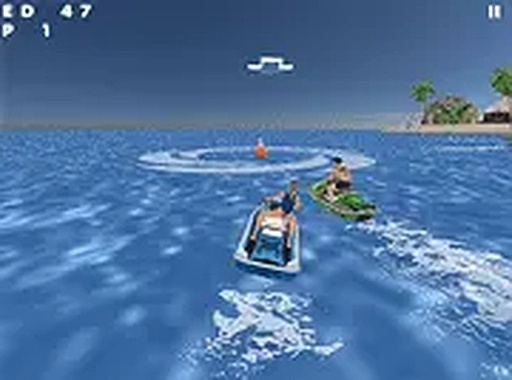
Every course in Wave Runner: Coastal Dash is built from floating markers, other vessels, and natural wave patterns. The objective is straightforward: reach each checkpoint without losing momentum to a collision. What makes it interesting is that the water itself changes how your craft behaves. Waves alter your turning arc, so a line that works on a calm stretch becomes risky in choppy sections. You are constantly reading the surface, not just the obstacles. [IMG_1]Precision Over Throttle
The handling model rewards anticipation. Turning depends on your current velocity and the wave conditions at that moment, which means you cannot simply hold the accelerator and steer late. Braking before a tight corner often determines whether you exit cleanly or spin out. Later stages shrink the gaps between hazards and speed up moving obstacles, so the same braking points stop working. You have to adjust your approach as the track demands more precision. [IMG_2]Bright, Legible Presentation
The visual design uses saturated colors and clear water textures. Sunlight reflects off the surface, and the horizon stays visible, which helps you judge distance to the next marker. There are no dark or intense themes here; the mood stays light and accessible. That clarity matters for gameplay, because you can focus on the racing line instead of straining to see hazards. [IMG_3]Progression Without Pressure
Completing a course unlocks the next one, with difficulty rising through obstacle density and tighter required precision. There is no external time limit beyond the implicit race against the clock. That structure lets you concentrate on clean runs rather than rushing. The narrative context gives you a reason to keep going without ever overshadowing the driving itself. [IMG_4]Controls and Accessibility
The game supports keyboard and mouse input, with a full-screen mode for a wider view. Controls are clearly labeled, and the learning curve stays gentle for newcomers. Experienced players can chase faster completion times by memorizing optimal routes and braking points. The gap between a safe finish and a fast one comes down to how well you internalize each course's rhythm.Editorial Notes
Compatibility
✅ Works on PC & Mobile | Recommended: Chrome / Safari / Edge
Comments
0 comments