
Balancing Production and Sales
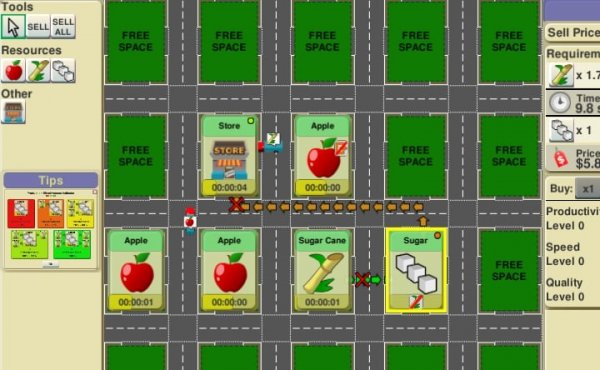
Every decision in Logistics Empire Tycoon comes down to one ratio: how much you make versus how much you can sell. Production units manufacture goods, while distribution points act as shops that move those goods to customers. Overbuild production and unsold stock accumulates; overbuild shops and you miss sales you could have made. That tension is the core loop, and it stays readable rather than punishing.
Expansion and Unlock Order
Earnings fund new product types and additional business branches. Each new line raises the same placement question again: where does the factory go, and how does it connect to the shops that sell its output? Because unlocks arrive gradually, you are never asked to plan an entire empire at once. Thinking a step ahead about layout leaves room for the next branch instead of forcing a rebuild.
Idle Earnings and Cloud Saves
The idle layer keeps the business running while you are away. Shops continue selling, profits accumulate, and you return to reinvest. Sessions can be a few minutes of checking in or a longer planning pass. Cloud save carries progress between devices, so switching hardware does not reset your network.
Layout Choices and Bottlenecks
Placement is open. Compact clusters keep goods moving short distances; sprawling layouts feel more like a real network. Either approach works until production outpaces distribution and goods stall. Clustering factories near shops is one common fix, spreading them out is another, and testing arrangements is part of how the game plays.
Pace and Audience
There are no timers or opponents pressing you forward. The challenge is planning, not reflexes, and the interface stays clean enough for short check-ins. Players who want steady growth and deliberate layout decisions will get more from it than those looking for fast, reactive strategy.
Comments
0 comments